Have you ever searched Tristan Meaning in Greek and felt unsure because different sources say different things? Maybe you’re choosing a name, or you’re just curious about its deeper roots. It’s natural to wonder what does tristan mean in greek and how that meaning connects to history or even faith.
In this blog post, you’ll get a clear and simple explanation of tristan meaning in greek, where the name comes from, and what it represents. We’ll also touch on how this meaning compares with the tristan meaning in bible, so you can see the full picture. By the end, you’ll have the answers you were looking for and feel confident about the name’s true meaning.
What Does Tristan Mean in Greek?
The question What Does Tristan Mean in Greek? often comes from curiosity about ancient roots. In simple terms, Tristan does not have a true Greek meaning. It did not originate from the Greek language. Ancient Greeks did not use this name. It comes from outside Greek naming traditions. Many people assume it sounds Greek, but that is a common misunderstanding.
In Greek context, Tristan is seen as a foreign name. It is usually linked to Celtic and medieval European history instead. Greeks may transliterate it into Greek letters, but the meaning stays the same. It does not gain a new definition in Greek culture. Instead, it keeps its original background and symbolic associations.
Etymology of Tristan Meaning in Greek

Many people assume Tristan comes from Greek roots, but that’s not exactly true. Ancient Greek language does not contain the name Tristan. It does not appear in classical Greek texts or naming traditions. Greeks usually formed names from gods, virtues, or nature. Tristan does not follow that pattern at all.
However, Greek writers later adopted foreign names through translation and history. When Tristan appeared in Greek texts, it was treated as a borrowed name. It was written using Greek letters for pronunciation. Even then, its meaning stayed foreign. Greek etymology never changed its original sense.
The Historical Origin of the Name Tristan: Tristan Meaning in Greek
The name Tristan has deep historical roots tied to European history rather than Greek origins. It is widely linked to medieval legends and reflects a mix of cultural influence, storytelling, and language evolution over time.
The interpretation may vary depending on the situation:
- Tristan is commonly traced to Celtic origins, especially the name Drustan, used in ancient Britain and Ireland.
- The name became famous through medieval European romance stories, especially the Tristan and Isolde legend.
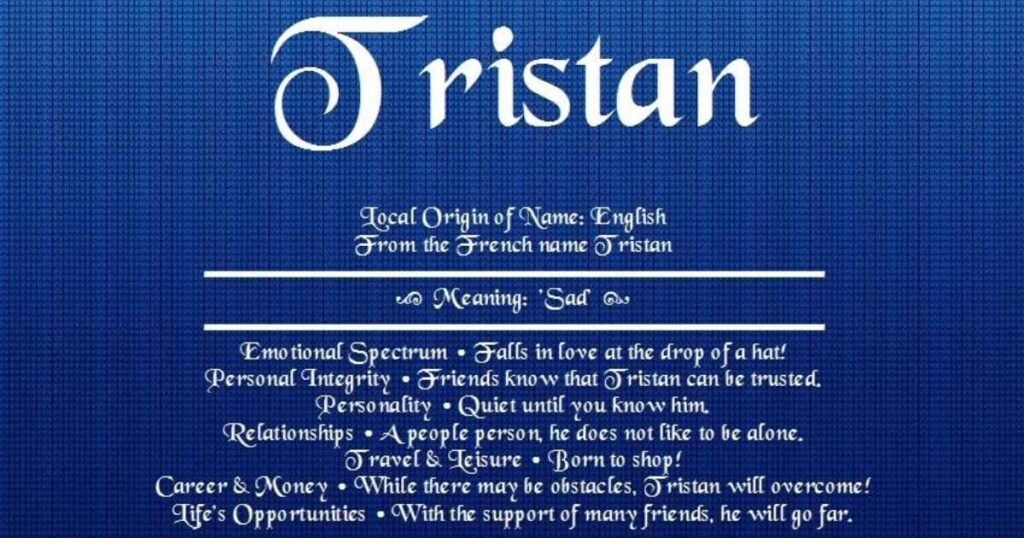
- Some historians connect its meaning to sorrow or emotional struggle, shaped by literary themes.
- Unlike Greek names, Tristan does not come from ancient mythology or classical Greek traditions.
- While admired for its romantic history, some view it as a foreign name outside traditional Greek naming culture.
Read more : Nice Meanings
Tristan in Greek Mythology and Ancient Stories
Many people expect Tristan to appear in Greek mythology. The name sounds heroic and emotional, much like ancient Greek figures. This curiosity makes sense. When we hear stories of love and tragedy, Greek myths often come to mind first.
However, Tristan does not belong to ancient Greek legends. His roots come from medieval European romance, not classical Greece. Still, the strong emotions found in Greek stories create a natural connection. That’s why the comparison feels familiar and meaningful.
Absence from Greek Myths
Greek mythology centers on gods and heroes such as Zeus, Achilles, and Perseus. Tristan is not mentioned in these ancient Greek narratives or texts.
Shared Themes of Tragedy
Greek myths and the Tristan legend both focus on love, fate, and loss. These shared themes often confuse readers about the name’s origin.
Influence of Ancient Storytelling
Greek storytelling shaped European literature over time. Later legends borrowed emotional depth, even if the characters were not Greek.
Medieval Literary Roots
Tristan comes from Celtic and medieval romance traditions. He remains a literary figure rather than a mythological hero.
In the end, Tristan isn’t part of Greek mythology, but shared human emotions make the link feel natural.
Cultural Significance of Tristan in Greek History and Tristan Meaning in Greek

At first glance, Tristan feels like a name pulled straight from ancient Greece. It sounds strong, poetic, and emotional. That’s why many people assume it holds deep roots in Greek history. The truth is more nuanced, and that’s what makes it interesting.
While Tristan is not a traditional Greek name, it still carries cultural meaning when viewed through a Greek lens. Greek history values storytelling, emotion, and character depth. Names linked to powerful stories often gain symbolic weight, even if they come from outside Greece.
Respect for Storytelling Traditions
Greek culture has always honored strong narratives. The tragic romance of Tristan fits well with Greek ideas about love, fate, and sacrifice.
Emotional Depth Over Origin
Greeks often value what a name represents, not just where it comes from. Tristan’s themes of struggle and devotion align with Greek cultural values.
Influence of European Literature
Medieval European stories entered Greek intellectual circles through translation and education. This helped names like Tristan feel familiar over time.
Foreign Names in Greek Context
Greece has a long history of adopting foreign names while preserving meaning. Tristan is sometimes appreciated for its literary and emotional tone.
In short, Tristan may not be Greek by origin, but its emotional power gives it a quiet place in Greek cultural appreciation.
How Ancient Greeks Used the Name
Ancient Greeks followed strong naming traditions rooted in mythology, family heritage, and religious belief. Names were closely tied to Greek gods, heroes, and virtues, which explains why foreign names like Tristan were not commonly used in ancient Greek society.
The interpretation may vary depending on the situation:
- Ancient Greeks preferred names from Greek mythology, such as Achilles or Alexander, rather than non-Greek origins.
- Tristan does not appear in ancient Greek records, inscriptions, or classical literature.
- Foreign names were rarely adopted unless they were fully adapted into Greek language and culture.
- Over time, Greeks became more open to international names, but this occurred long after ancient periods.
- Some may appreciate Tristan today for its sound, though it lacks roots in ancient Greek naming customs.
The Connection Between Greek Language and Tristan Meaning in Greek
The name Tristan does not originate from the Greek language or its ancient vocabulary. It has no roots in classical Greek words or meanings. Many people assume a Greek link because the name sounds lyrical and strong. However, traditional Greek names usually come from gods, nature, virtues, or heroic traits found in Greek mythology and history.
In the Greek language, Tristan is treated as a foreign name. Greeks write it using their own alphabet, but the meaning stays unchanged. Only the spelling adapts, not the origin. Even today, when Greeks use Tristan, it remains a non-Greek name with Western European roots.
You may like also : Tristan Meaning in Bible: Spiritual Symbolism & Verse
Tristan vs. Greek Names: Similarities and Differences
Tristan and Greek names may sound alike at first. But their origins and meanings follow different paths shaped by culture and history.
Similarities
- Both often sound strong and melodic
- Both can carry emotional or symbolic value
- Both are used across different cultures today
Differences
- Greek names come from ancient Greek language and mythology
- Tristan comes from Celtic and medieval European tradition
- Greek names usually have direct meanings in Greek words
- Tristan’s meaning is literary, not linguistic in Greek
Modern Usage of Tristan in Greek-Speaking Countries
In modern Greek-speaking countries, the name Tristan is used occasionally, but it is still uncommon. Parents who choose it often like international names. It feels modern and stylish. Media, books, and global culture influence this choice. The name stands out because it is different from traditional Greek names passed down through families and religious customs.
Even today, Tristan is mostly seen as a foreign name in Greece. Greeks usually write it using Greek letters while keeping the original sound. It is rarely chosen for religious reasons. Traditional Greek names remain more popular. Tristan is used more in urban areas where global influences shape modern naming trends.
Why Parents Choose Tristan: Greek Heritage Perspective
Some parents with Greek heritage choose the name Tristan because it feels modern and global. It sounds strong, emotional, and easy to pronounce. Many parents want a name that works across cultures. Tristan feels familiar through movies and books. It also stands out from traditional Greek names. For some families, uniqueness matters more than following old naming customs.
From a Greek heritage perspective, Tristan offers a fresh alternative to classic names. It is not linked to saints or ancient myths. Parents may like its literary feel and modern sound. The name feels international and flexible. Even without Greek roots, it fits modern lifestyles. Many parents value personal meaning and global appeal more than tradition when choosing names today.
Famous People Named Tristan with Greek Heritage
There are very few well-known figures named Tristan who have direct Greek heritage. The name is more common in Western Europe, but it occasionally appears among people with Greek background due to modern naming trends and global influence.
The interpretation may vary depending on the situation:
- Some individuals named Tristan have partial Greek heritage but were raised in international or mixed cultural environments.
- The name is more often chosen by Greek families living abroad rather than in Greece itself.
- In creative fields like art, sports, or media, Greek families may choose Tristan to reflect a global identity.
- There are no historically famous Greek figures named Tristan from ancient or classical periods.
- While admired for its modern sound, some critics feel it lacks strong ties to Greek name traditions.
Tristan Name Variations Across Greek Regions
Names can change just a little when they travel, and Tristan is no different. If you hear it spoken in different parts of Greece, you may notice small shifts. These changes don’t alter the name itself. They simply help it fit the local language and sound patterns.
In Greece, Tristan stays mostly the same, but pronunciation and spelling adapt slightly. Greeks often adjust foreign names so they flow better in everyday speech. Think of it like adding a local accent to a familiar word.
Greek Alphabet Adaptation
Tristan is often written as Τρίσταν or Τρίσταντ to match Greek letters. The meaning stays the same.
Pronunciation Differences
In some regions, the “r” sound is softer or rolled slightly, depending on local speech habits.
Urban vs Rural Usage
Larger cities are more open to using foreign names like Tristan, while rural areas prefer traditional Greek names.
No Traditional Variants
Unlike Greek names, Tristan does not have regional Greek versions passed down through generations.
In the end, Tristan remains a global name in Greece, gently shaped by local language rather than tradition.
The Symbolism Behind Tristan Meaning in Greek Culture
Some names carry feeling before they carry history. Tristan is one of those names. Even though it is not Greek in origin, many people in Greece connect it with deep emotion and strong character. It sounds poetic, almost like a name from a tragic play or old story.
In Greek culture, symbolism matters more than origin alone. Greeks often focus on what a name represents in spirit. Tristan is linked with ideas of love, struggle, and inner strength, which closely match themes found in Greek literature and philosophy.
Emotion and Depth
Greek culture values emotional expression. Tristan feels dramatic and heartfelt, similar to characters in ancient Greek tragedies.
Love and Sacrifice
The name is often associated with deep love and sacrifice, themes that appear often in Greek myths and stories.
Strength Through Hardship
Greeks admire endurance during pain. Tristan symbolizes quiet strength, much like Greek heroes who suffer before triumph.
Foreign Name, Familiar Meaning
Although non-Greek, the meaning behind Tristan fits well with Greek values of passion and resilience.
In the end, Tristan’s symbolism feels Greek in spirit, even if the name itself is not.
How to Pronounce Tristan in Greek
In Greek, the name Tristan is pronounced almost the same as in English. Speakers usually place stress on the first syllable. The sound stays smooth and clear. Greeks prefer simple pronunciation for foreign names. Because Tristan is easy to say, it fits well in conversation. The name does not feel awkward or difficult when spoken aloud in Greek settings.
When written in Greek, Tristan becomes Τρίσταν. Each letter helps guide pronunciation clearly. Greeks read it exactly as it looks. There is no hidden meaning added through pronunciation. The name keeps its original sound. This makes Tristan familiar and easy for Greek speakers to use today.
Is Tristan a Popular Name in Greece Today?
Tristan is not a common name in Greece today, but it is known and occasionally used. It is mostly seen as a foreign or international name rather than a traditional Greek one.
The interpretation may vary depending on the situation:
- Traditional Greek names linked to saints and family history remain more popular in Greece.
- Tristan is more likely chosen by families influenced by global culture or living abroad.
- The name appears more often in large cities than in rural areas.
- Some parents like Tristan for its modern sound and international appeal.
- Others avoid it because it lacks Greek linguistic and cultural roots.
Tristan’s Role in Greek Literature and Poetry
Some names feel like they belong in poetry, even if they come from somewhere else. Tristan is one of those names. When Greek readers see it, they often expect romance, emotion, and tragedy. That feeling alone gives the name a quiet place in literary discussion.
Although Tristan does not appear in ancient Greek literature, it has influenced modern Greek writing through translated works and romantic storytelling. Greek poets and writers often admire stories that focus on love, fate, and sacrifice, which makes Tristan’s story feel familiar.
Influence Through Translation
Greek literature has embraced many European romantic stories. Translations of medieval tales introduced Tristan to Greek readers.
Shared Literary Themes
Greek poetry values love, destiny, and emotional struggle. These themes closely match the story of Tristan and Isolde.
Symbol of Tragic Romance
In modern Greek writing, Tristan may be referenced as a symbol of intense and doomed love rather than a character.
Inspiration, Not Origin
Tristan inspires Greek poets emotionally, even though the name has no roots in ancient Greek texts.
In short, Tristan lives in Greek literature as an idea and symbol, not as a traditional literary figure.
The Greek Influence on Tristan Meaning in Greek Over Time
Greek culture has influenced how people understand names through symbolism, philosophy, and storytelling. While Tristan did not originate in Greece, Greek ideas about meaning and character have shaped how the name is interpreted over time.
The interpretation may vary depending on the situation:
- Greek philosophy emphasizes inner character, which leads some to view Tristan as a name representing emotional depth and strength.
- Greek literature values tragic beauty, helping the name gain symbolic meaning through themes of love and fate.
- Over time, Greek translations of European stories influenced how Tristan was perceived culturally.
- Some scholars note that Greek influence is interpretive, not linguistic or historical.
- Others feel the name remains largely unchanged despite symbolic associations.
Tristan Meaning in Greek Compared to Other European Cultures
In Greek culture, the name Tristan does not have a direct meaning. Greeks see it as a foreign name with emotional tone. It sounds poetic and dramatic. However, it is not linked to Greek language roots or mythology. The meaning mostly comes from how the name feels, not from Greek history or words.
In other European cultures, Tristan has clearer meaning and background. In Celtic and medieval traditions, it connects to sorrow, love, and romance. Stories like Tristan and Isolde shaped its identity. Unlike Greece, these cultures see Tristan as deeply rooted in their history, language, and storytelling traditions.
Greek Transliteration of the Name Tristan
Greek transliteration helps foreign names fit the Greek writing system. Tristan is written in Greek letters so people can read it easily. The sound stays close to the original. Greeks do not change the meaning. They only adjust the spelling. This method is common for international names used in modern Greek language and media today.
In Greek, Tristan is usually written as Τρίσταν. Each letter represents a matching sound. This keeps pronunciation simple and clear. The name looks Greek on paper but remains foreign in origin. Transliteration helps communication, not cultural ownership. Tristan keeps its European roots even when written in Greek alphabet form
How Greek Naming Traditions Treat Foreign Names
Greek naming traditions are deeply rooted in history, religion, and family heritage. Foreign names are accepted today, but they are still viewed differently from traditional Greek names linked to saints, ancestors, and Greek language origins.
The interpretation may vary depending on the situation:
- Traditional Greek names are often chosen to honor family members or religious figures.
- Foreign names are usually transliterated into Greek rather than translated for meaning.
- Some families welcome international names to reflect modern or global identity.
- Others prefer Greek names to preserve cultural and religious traditions.
- Acceptance of foreign names is more common in urban areas and younger generations.
The Role of Language Evolution in Tristan Meaning in Greek
Language changes over time, and name meanings often change with it. Tristan’s meaning has shifted as it moved across cultures and languages. Each society added its own understanding. This made the name richer in feeling. Even without Greek roots, language evolution helped shape how people interpret Tristan today.
As Tristan passed through different regions, pronunciation and symbolism changed slightly. Stories and translations influenced meaning more than language rules. In Greek culture, the name gained emotional value, not linguistic meaning. Language evolution allowed Tristan to feel familiar, even while remaining a foreign name.
Is Tristan Accepted in Orthodox Greek Communities
In Orthodox Greek communities, names often come from saints or religious tradition. Because of this, Tristan is not a common choice. Many families prefer names with strong spiritual meaning. Tristan is seen as modern and foreign. Still, some families accept it for personal or cultural reasons.
Acceptance of Tristan depends on family beliefs. Some Orthodox families allow non-traditional names if the child has a Christian baptism name. Others prefer to follow tradition closely. While Tristan is not rejected, it is less favored than classic Orthodox Greek names.
Tristan as a Global Name Through a Greek Lens
Tristan is widely recognized as a global name, even though it is not Greek in origin. From a Greek perspective, it is viewed as an international name shaped by literature, culture, and modern naming trends rather than traditional Greek roots.
The interpretation may vary depending on the situation:
- Greeks often see Tristan as a Western European name with strong literary influence.
- It is more accepted among families who value global identity over strict tradition.
- Some appreciate its emotional depth and modern sound.
- Others feel it lacks connection to Greek language and Orthodox heritage.
- Overall, Tristan is respected as a global name, but not a traditional Greek one.
What Greek Scholars Say About Tristan’s Origin
Greek scholars generally agree that Tristan does not come from Greek origin. They point to Celtic and medieval European roots. The name appears in romance literature, not ancient Greek texts. Scholars stress that Greek names usually come from mythology, language, or religion, which Tristan does not follow.
Many scholars explain that Tristan entered Greek awareness through translations and education. They see it as a borrowed name with symbolic value. While respected for its literary history, it is still considered foreign within traditional Greek naming systems.
Frequently Asked Questions
Do Greek scholars accept Tristan as Greek?
Tristan Meaning in Greek is discussed by scholars as a foreign name. They agree it has no Greek roots, even though it feels familiar to modern speakers.
Is Tristan popular among Greek families?
Tristan Meaning in Greek appears mostly among modern families. It is chosen for its international style, not because of Greek tradition or religious meaning.
Does Greek culture influence Tristan meaning in Greek?
Tristan Meaning in Greek is shaped by Greek views on emotion and storytelling. The culture adds symbolic value, even though the name itself is not Greek.
Is Tristan used in Greek culture today?
Tristan Meaning in Greek appears mostly in modern settings. It is used by families who prefer international names, especially in cities influenced by global culture.
How do Greeks understand Tristan meaning in Greek?
Tristan Meaning in Greek is understood symbolically. Greeks often associate it with emotion, love, and struggle rather than a direct Greek translation or mythological source.
Why do people search for Tristan meaning in Greek?
Tristan Meaning in Greek interests people because the name sounds poetic. Many expect Greek roots, but learn its meaning comes from literature, not Greek language.
Conclusion
Many people search for what does Tristan mean in Greek and expect a clear ancient answer. The truth is simple and honest. The name does not come from Greek language or mythology. It entered Greek culture through literature and modern influence. Tristan Meaning in Greek is understood more by how it sounds and feels. Greeks often see it as poetic and emotional. That is why the curiosity around Tristan Meaning in Greek continues today.
In conclusion, the name holds symbolic value rather than historical roots in Greece. People also compare it with tristan meaning in bible to understand its deeper emotional themes. Others simply search tristan meaning in greek for clarity. The name remains foreign but accepted. It reflects modern taste and global influence. Even without Greek origin, Tristan still feels meaningful to many.