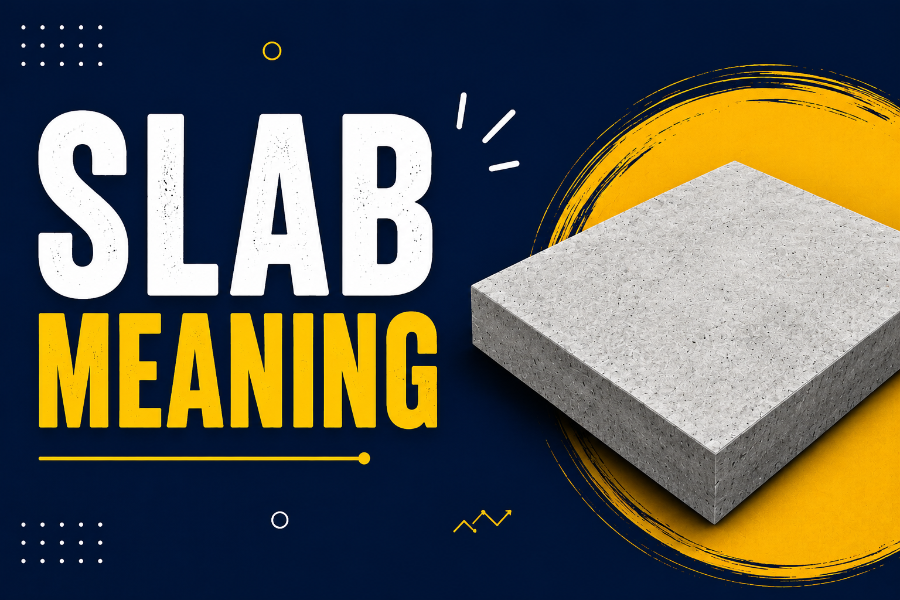
A slab meaning search can point to many things. A slab is just a flat, thick piece of material. It could be made of concrete, stone, wood, metal, or glass. People often use this word in building work, home design, and construction projects.
The most common slab meaning is a flat concrete surface used in buildings. It may support floors, walls, doors, or outdoor spaces. But where you put the word can change the meaning. That is why it helps to understand each type clearly.
Here is a simple breakdown:
- A slab can be a flat piece of concrete
- A slab can be part of a foundation
- A slab can be a plain door without frame or hardware
- A slab can be used under homes, garages, and patios
- A slab can also mean a flat stone or tile piece
Overall, slab meaning depends on the subject. In construction, it usually means a strong flat layer that supports weight. In doors, it means only the door panel. In flooring, it may mean stone, tile, or concrete.
Slab On Grade Meaning
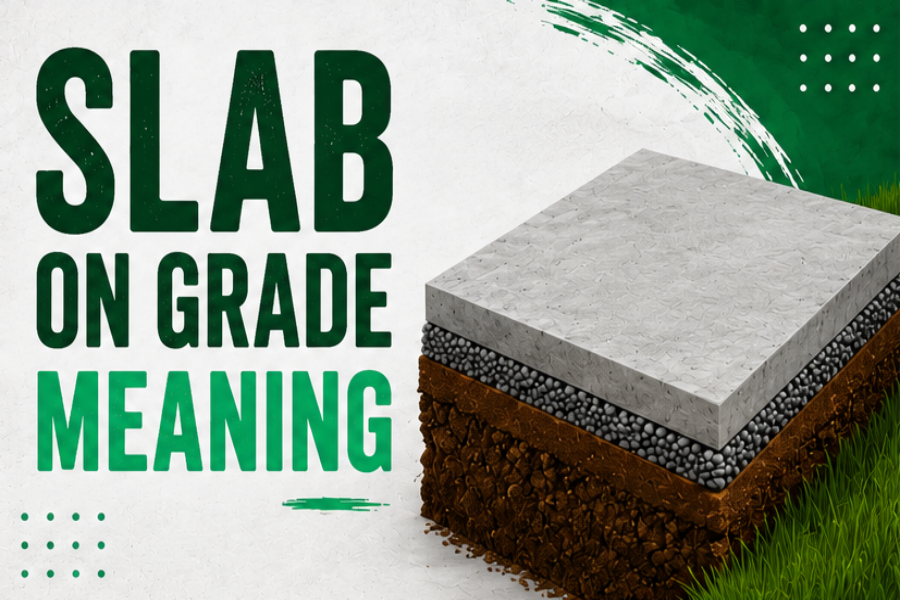
Slab On Grade Meaning in the phrase slab on grade is very common in construction. A slab on grade is a concrete slab poured directly on the ground. It does not sit over a basement or crawl space. It rests on prepared soil or gravel.
This type of slab is often used for homes, garages, sheds, patios, and commercial buildings. Builders prepare the ground first. Then they add a base layer, moisture barrier, reinforcement, and concrete. The goal is to create a flat and solid floor.
A slab on grade usually includes:
- Compacted soil under the slab
- Gravel or crushed stone base
- Vapor barrier for moisture control
- Steel reinforcement or wire mesh
- Poured concrete surface
The main benefit is simple construction. A slab on grade can be faster and cheaper than building a basement. It also gives a strong floor surface. Many warm climate homes use this type because frost depth is less of a problem.
Still, the ground must be prepared well. Poor soil, bad drainage, or weak compaction can cause cracks. So when people ask about slab meaning in slab on grade, they are usually asking about a concrete floor that sits directly on the earth.
Rat Slab Meaning
Slab meaning in rat slab is a little different. A rat slab is a thin concrete layer placed over soil in places like crawl spaces, basements, or utility areas. It is not usually a main structural floor. Its job is more about cleanliness and protection.
The name sounds strange, but it is easy to understand. A rat slab helps stop pests from digging through exposed soil. It can also reduce moisture, mud, dust, and odors. It makes the crawl space easier to access and cleaner.
Typical applications for a rat slab are:
- Crawl spaces beneath homes
- Basement utility areas
- Storage areas with exposed soil
- Pest control areas
- Areas requiring a clean concrete cover
A Rat Slab Meaning is typically thinner than a structural slab. It may not be designed to carry heavy loads. Builders use it to cover the ground and improve the space. It can also help workers move around without stepping on dirt.
So the slab meaning here is not about a full foundation floor. It means a simple concrete cover over soil. It gives a neater surface and helps protect the space from rodents and moisture problems.
Foundation Slab Meaning
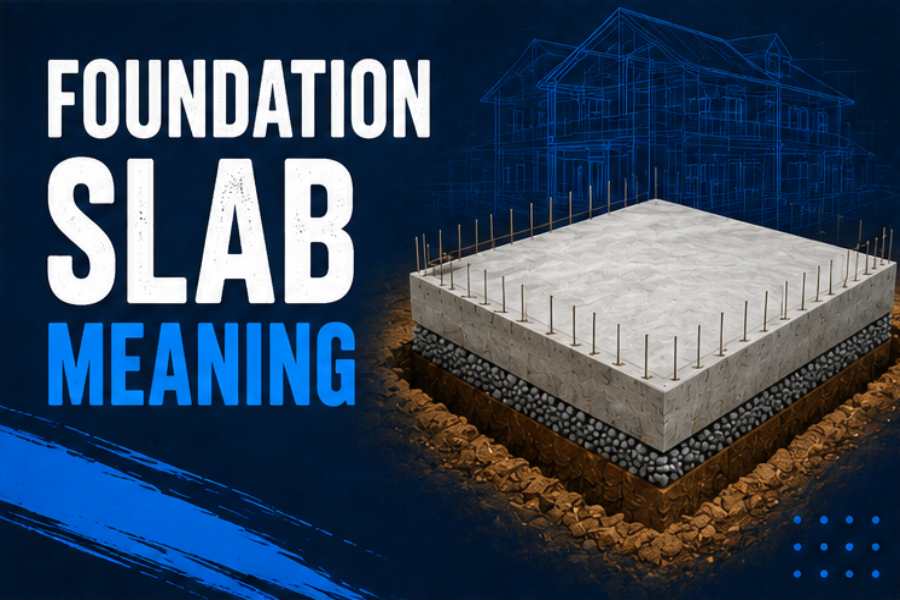
Slab meaning in foundation work is very important. A foundation slab is a concrete base that supports a building. It spreads the weight of walls, floors, furniture, and people across the ground. This helps keep the structure stable.
A Foundation Slab Meaning is common in modern homes. It is often used when a basement is not needed. Builders pour concrete over a prepared base, possibly adding steel reinforcement and thickened edges for extra strength.
Here is a quick table to understand it better:
| Aspect | Foundation Slab Meaning |
| Basic idea | Concrete base for a building |
| Main job | Supports the structure |
| Common material | Reinforced concrete |
| Used for | Homes, garages, shops, and small buildings |
| Strength need | High |
| Main risk | Cracking from soil movement |
| Best result | Strong flat support for the building |
Care must be exercised in planning a foundation slab. Soil conditions, drainage, thickness and reinforcement are all important. If done poorly, these parts can lead to slab cracking or settling. This can cause problems for your walls, floors and doors.
Simply put, a slab foundation is a solid concrete foundation. It is a very essential part of a building. It holds all the things that are above it and helps the structure remain level.
Door Slab Meaning
Slab meaning in doors is not about concrete. A door slab means the door panel only. It does not include the frame, hinges, knob, or hardware. It’s only the flat door piece that opens and closes.
This term is common when buying replacement doors. If you already have a frame, you may only need a door slab. But if you need a full door setup, you may need a prehung door instead. The difference matters before buying.
A door slab usually means:
- Door panel only
- No frame included
- No hinges attached in many cases
- No knob or lockset installed
- May need cutting or drilling
This type of door can save money if your existing frame is in good shape. But it may need more work. The installer may need to trim the slab, cut hinge spaces, and drill holes for the handle. Exact measurements are very important.
So slab meaning in door language is simple. It means only the door itself. It is not a complete door unit. This is one of the biggest differences between construction slab and door slab.
Slab Meaning In Construction
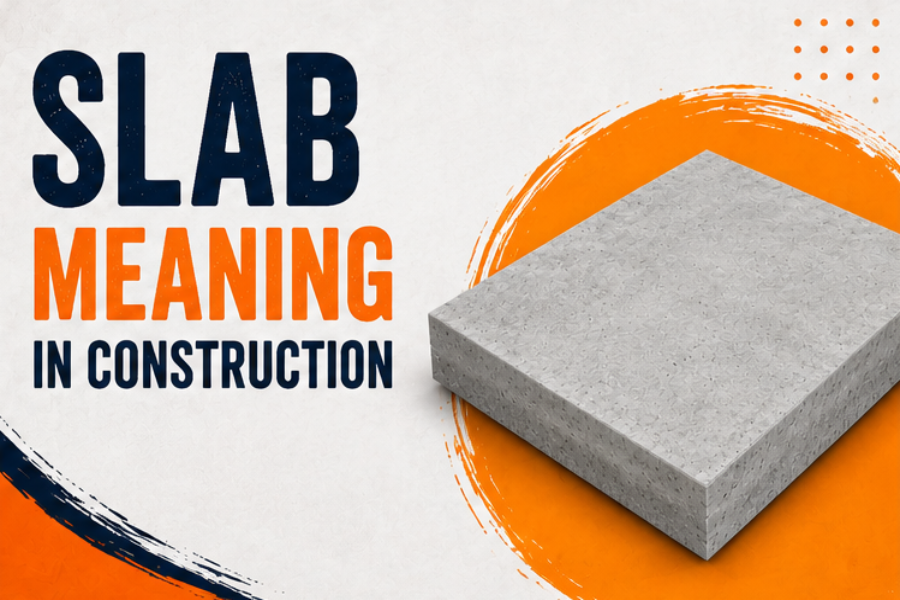
Slab meaning in construction usually means a flat concrete section used as a floor, roof, or foundation surface. It may be horizontal or slightly sloped. It may be part of a building, bridge, patio, driveway or walkway.
Concrete slabs are used because they are strong and durable. They can carry heavy loads when designed correctly. Engineers decide the thickness, reinforcement, and concrete mix based on the project. A house floor slab is different from a bridge slab or warehouse slab.
Common construction slabs include:
- Floor slab
- Roof slab
- Foundation slab
- Patio slab
- Driveway slab
- Suspended slab
- Slab on grade
Each type has a different purpose. A floor slab supports people and furniture. A roof slab covers the top of a building. A suspended slab sits above the ground and is supported by beams, columns, or walls.
Here is a simple comparison:
| Slab Type | Simple Meaning | Common Use |
| Floor slab | Flat concrete floor | Homes and buildings |
| Roof slab | Concrete roof layer | Flat roof structures |
| Foundation slab | Base slab | Building support |
| Patio slab | Outdoor concrete surface | Backyards |
| Driveway slab | Vehicle surface | Parking areas |
| Suspended slab | Raised slab | Multi-story buildings |
The slab meaning in construction is broad. The basic idea is the same, though. It is a flat section that spreads weight and creates a usable surface. The exact design depends on the building need.
Why Slabs Are Important
Slab meaning becomes easier when you understand why slabs matter. A slab is not just a flat layer. It can bear weight, protect the ground, make a floor, and add strength to a building. Many structures depend on slabs every day.
In homes, slabs help create level floors. In commercial buildings, slabs support heavy traffic and equipment. In outdoor areas, slabs create patios, sidewalks, and driveways. This makes them useful in both small and large projects.
Slabs are important because they can:
- Support heavy loads
- Create level surfaces
- Help manage moisture
- Add to the durability
- Support walls and other loads
- Make spaces easier to use
A good slab begins with good planning. The base must be stable. Drainage must be managed. Concrete must be mixed and cured properly. If the work is rushed, cracks and settlement can happen later.
That is why slab meaning is more than just a dictionary definition. In real projects, a slab affects safety, comfort, cost, and long-term performance.
Read More: WYF Meaning in Text: What It Really Means (You’ll Be Surprised)
Final Thoughts
Slab meaning can change based on the situation. In construction, it usually means a flat concrete section. In foundations, it means the base that supports a building. In door shopping, it means only the door panel. In crawl spaces, a rat slab means a thin concrete cover.
The best way to understand slab meaning is to look at the context. If someone talks about concrete, they likely mean a floor or foundation slab. If someone talks about doors, they mean the panel only. If they talk about pest control, they may mean a rat slab.
Overall, slab meaning is simple when broken down. It is a flat piece or layer used for support, cover, or structure. The material and purpose change, but the flat shape is the main idea.
FAQs About Slab Meaning
Q1. What does slab meaning mean in simple words?
Slab meaning means a flat and thick piece of material. In construction, it usually means a flat concrete layer.
Q2. What is slab meaning in construction?
In construction, a slab is a flat concrete section used for floors, roofs, foundations, patios, or driveways.
Q3. What is slab on grade meaning?
Slab on grade means a concrete slab poured directly on prepared ground. It is common in homes and garages.
Q4. What is rat slab meaning?
A rat slab is a thin concrete layer over soil. It helps control pests, dust, mud, and moisture.
Q5. What is foundation slab meaning?
A foundation slab is a concrete base that supports a building. It spreads the load across the ground.
Q6. What is door slab meaning?
A door slab means the door panel only. It does not include the frame, hinges, knob, or lock.
Q7. Is a slab always made of concrete?
No. A slab can be made of stone, wood, metal, glass, or concrete. In building work, concrete is most common.
Q8. Why do concrete slabs crack?
Concrete slabs can crack from soil movement, poor drainage, weak base work, drying shrinkage, or heavy loads.