

Have you ever heard someone say “tamam” and felt confused about what it really means? for instance Maybe you saw it in a text, a drama, or while talking to an Arabic-speaking friend. You might be wondering about the Tamam Meaning and why people use it so often. It can feel frustrating not fully understanding a simple word.
In this post, you’ll learn the clear and simple Tamam Meaning, along with its everyday use. We will also explain tamam meaning in arabic and how it fits into real conversations. By the end, you’ll feel confident using it naturally and correctly. Keep reading you’re about to make it all make sense.
The Meaning of “Tamam” in Arabic
Tamam is a common Arabic word that usually means okay, alright, or complete.In other words People often use it to show agreement, confirmation, or understanding in daily conversations. It’s simple but versatile, appearing in both casual chats and formal situations.
In Arabic culture, saying this term can also express that something is finished or done properly. It can reflect politeness and attentiveness. Depending on context, it can mean “all set,” “fine,” or “understood.” The word is widely recognized across Arabic-speaking countries, making it an essential term to know for communication and cultural understanding.
Linguistic Root and Grammatical Usage
Have you ever wondered why the word Tamam feels so natural in conversation? Its simplicity hides a deep linguistic history. Understanding its root and grammar helps you see how Arabic builds meaning from just a few letters.
The word Tamam comes from the Arabic root T-M-M, which generally relates to completion, perfection, or being whole. consequently, this root appears in many words, giving them a sense of finality or completeness. Knowing the root helps learners recognize patterns and meanings in other Arabic words.
Key points to understand Tamam’s linguistic use:
Root System:
The T-M-M root forms words like tamam (complete), mutamim (perfect), and tamma (it’s done). This shows how Arabic builds meaning from a core idea.
Verb and Noun Forms:
Tamam can function as an adjective, adverb, or even interjection depending on context. For example, “Ana tamam” means “I’m okay.”
Formal vs. Informal Usage:
In formal Arabic, Tamam might mean “completed” or “finished,” while in casual talk, it simply conveys “alright” or “fine.”
Cultural Nuance:
The way Tamam is said can add emotion,enthusiastic, neutral, or polite without changing the core meaning.
Pattern Recognition:
Learning T-M-M helps with other Arabic words sharing the root, making vocabulary expansion easier.
In short, Tamam is more than a simple “okay.” Its root connects it to ideas of wholeness and completion, while its grammatical flexibility makes it a versatile word in Arabic. Understanding this gives you confidence in using it naturally
Examples of “Tamam” in Arabic Sentences
Tamam is widely used in Arabic conversations to express agreement, understanding, or completion. It can be used in formal and informal situations naturally. Here are practical examples:
- Responding to a friend’s question about plans: “Tamam, see you at 6.”
- Similarly,Acknowledging instructions from a teacher or boss: “Tamam, I will do it.”
- Confirming understanding during a conversation: “Tamam, I get your point.”
- Expressing that a task is finished: “Tamam, the report is ready.”
- Agreeing to a suggestion: “Tamam, let’s try that idea.”
- Replying politely to someone checking on you: “Ana tamam, thank you.”
- Indicating that everything is fine in daily chat: “Tamam, everything is okay.”
This shows how versatile Tamam is in daily Arabic speech. It’s short, simple, and widely understood across different dialects.
Cultural or Quranic Significance of “Tamam”
Have you ever wondered why Arabs often say Tamam in daily life? This simple word isn’t just casual; it carries cultural depth and reflects respect, agreement, and understanding. In some contexts, Tamam connects to completeness, which has subtle roots in Quranic language.
Using Tamam goes beyond words; it shows awareness of manners, social harmony, and attentiveness in conversation. Specifically,here’s how its cultural and Quranic significance plays out:
Sign of Agreement and Respect:
Saying Tamam acknowledges what someone else says politely. It shows you are listening and valuing their words.
Reflecting Completeness in Quranic Context:
The root T-M-M conveys wholeness and perfection, often seen in Quranic verses describing completeness of creation or duties.
Everyday Social Harmony:
Tamam smooths interactions, whether in family chats, work meetings, or casual greetings.
Versatile Across Dialects:
Though pronunciation or usage might differ slightly, Tamam retains its cultural essence across Arabic-speaking regions.
Subtle Religious Connection:
Using Tamam consciously can reflect mindfulness and attentiveness, aligning with values taught in Islam about proper speech.
In short, Tamam is more than just “okay.” It’s a word that bridges communication, culture, and spiritual mindfulness, making it both practical and meaningful.
Read More: Nice Meaning
Common Misunderstandings or Mistakes
Tamam is simple but often misused. People sometimes confuse it with casual slang or think it always means full agreement. Understanding the context is key to using it correctly.
| Misunderstanding | Explanation |
| Always means yes | Tamam can indicate understanding, not necessarily agreement. |
| Only casual use | It’s also appropriate in formal or polite situations. |
| Interchangeable with okay | Tamam has cultural nuances beyond simple confirmation. |
| Ignoring tone | Tone changes meaning; neutral vs. enthusiastic alters intent. |
| Can be skipped in conversation | Leaving it out may seem dismissive in Arabic culture. |
| Same in all dialects | Different regions pronounce or use it slightly differently. |
| Literal translation works every time | Some meanings are cultural and don’t translate directly. |
Why You Should Learn “Tamam”
Learning Tamam helps you communicate clearly in Arabic. It’s used daily in conversations, from casual chats to polite discussions. Knowing how to use it shows respect for the language and culture. You’ll understand context, tone, and meaning better when interacting with Arabic speakers.
Tamam is more than a word; it reflects agreement, completion, or understanding. Using it correctly can prevent misunderstandings and build trust. Whether traveling, working, or chatting online, mastering Tamam makes conversations smoother. It also helps you recognize cultural nuances and express yourself naturally in Arabic settings.
Tamam Meaning in Urdu
Tamam in Urdu means complete, finished, or okay. People use it to show agreement or confirm understanding in daily conversations. Saying it indicates that a task is done or everything is fine. It is simple but important for clear communication. Using this term properly adds politeness and shows attentiveness in conversations.
this can also mean everyone or all, depending on the context. It is used in both formal and informal settings, from casual talks to official communication. Learning the correct usage of Tamam helps avoid misunderstandings. Understanding Tamam in Urdu also makes it easier to connect with native speakers and follow conversations naturally without confusion.
Cultural Context
Tamam is more than just a word in daily speech. It reflects politeness, agreement, and social harmony in many communities. When someone says Tamam, it often signals respect and attentiveness. In conversations, it helps keep communication smooth and friendly. People use it naturally in family discussions, workplaces, and casual gatherings.
In cultural settings, tone matters a lot when saying Tamam. A warm tone shows enthusiasm, while a calm tone shows simple confirmation. It can also reflect cooperation and positive attitude. In both Arabic and Urdu cultures, using Tamam properly builds connection. It makes conversations feel balanced, respectful, and comfortable for everyone involved.
Tamam Arabic to English
Ever heard someone say tamam and wondered what it really means in English? It looks simple, but its meaning shifts depending on tone, context, and even country. That’s what makes it interesting. Translating it isn’t just about finding one word. It’s about understanding how people actually use it in real conversations.
In Arabic, tamam carries the idea of completion, agreement, or confirmation. But when you move from Arabic to English, the translation changes slightly based on the situation. Think of it like the English word “fine.” It can mean good, acceptable, or finished depending on how you say it. Tamam works in a very similar way.
Primary English Translations
Here are the most accurate and natural English meanings:
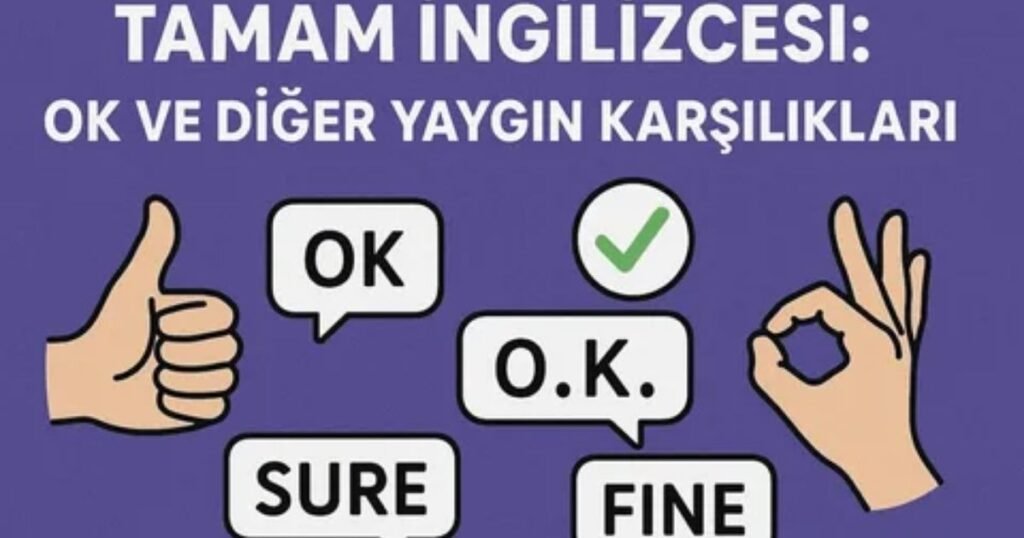
- Okay / Alright ; This is the most common translation. If someone gives instructions and you reply with tamam, you’re basically saying “Okay, got it.” It shows understanding and acceptance.
- Fine / Good ;When someone asks how things are going, saying tamam can mean “Everything is fine.” It reflects satisfaction or that nothing is wrong.
- Complete / Finished ; In more formal or written contexts, it refers to something being completed fully. For example, a project that is done properly can be described with a word from the same root.
- All set / Done ; In daily speech, especially in casual settings,this term can mean that everything is ready or taken care of. It signals closure.
Translation Variations by Dialect
Not every region uses tamam in exactly the same way.
In Egyptian Arabic, it’s very common in everyday speech and often sounds friendly and relaxed. In Gulf dialects, it may carry a slightly firmer tone, especially in work settings. In Levantine Arabic, it blends smoothly into casual conversation, often repeated for emphasis.
Interestingly, the emotional tone matters just as much as the word itself. A quick tamam can sound neutral. A stretched-out “tamaaaam” can sound enthusiastic or even sarcastic. English translations don’t always capture that nuance.
Common English Phrases with Tamam
To make it practical, here are some natural equivalents in real-life situations:
- “Okay, no problem.”
- “Alright, I understand.”
- “Everything’s good.”
- “It’s done.”
- “Sounds good to me.”
Notice how the English meaning depends on context. You wouldn’t translate tamam the same way in every sentence. That’s the key lesson here.
In the end, translating tamam from Arabic to English isn’t about memorizing one definition. It’s about reading the situation. Once you understand the tone and context, choosing the right English equivalent becomes easy and natural.
Tamam Meaning Turkish
If you’ve ever visited Turkey, you’ve probably heard the word tamam everywhere. In shops, on the street, at home. It’s short, friendly, and incredibly common. But what does it really mean in Turkish, and how is it different from Arabic usage? Let’s break it down in a simple way.
In Turkish, this term means “okay,” “alright,” “complete,” or “done.” It’s one of the most frequently used words in daily conversation. While the word originally comes from Arabic, it has fully blended into modern Turkish and developed its own cultural tone.
Primary Meanings in Turkish
Here are the main meanings of tamam in Turkish:
- Okay / Alright ; This is the most common meaning. If someone gives instructions and you reply with tamam, it simply means “Okay, I understand.” It shows agreement and readiness.
- Finished / Done ; When a task is completed, a person may say tamam to signal that everything is completed properly. It gives a sense of closure.
- Enough / That’s sufficient ;In some contexts, tamam can mean “That’s enough.” For example, when pouring tea, someone might say tamam to indicate you should stop.
- Confirmed ;It can also express confirmation, similar to saying “Confirmed” in English. It reassures the other person.
Most Common Turkish Uses
In everyday life, tamam is everywhere. You’ll hear it in:
- Family conversations when parents give instructions to children.
- Workplace discussions to confirm tasks.
- Casual chats between friends when making plans.
- Shops and markets to confirm a purchase.
It works like a social glue. Short, clear, and efficient.
Differences Between Turkish and Arabic Usage
Although the word comes from Arabic, its usage in Turkish is slightly different.
In Arabic, tamam is strongly connected to the root meaning “complete” or “perfect.” In Turkish, the meaning is more conversational and less tied to grammar or root patterns. Most Turkish speakers don’t think about its Arabic origin at all.
Moreover,another difference is tone. In Turkish, tamam can sometimes sound firm or even slightly strict, depending on how it’s said. In Arabic dialects, it often feels softer or more expressive.
Cultural Context in Turkey
In Turkish culture, tamam reflects efficiency and clarity. Conversations in Turkey often move quickly, and this word helps keep things smooth.
It can also signal respect. When someone older speaks and you reply with tamam, it shows acknowledgment and understanding.
A lesser-known fact is that Turkish has many Arabic-origin words, especially from the Ottoman period. Yet tamam survived modern language reforms because it remained practical and widely loved. That says a lot about its importance.
In short, tamam in Turkish is simple but powerful. It means okay, done, confirmed, or enough depending on context. Understanding its tone and usage helps you sound more natural and connect better with Turkish speakers. Sometimes the smallest words carry the biggest cultural meaning.
Tamam Meaning in Arabic Letters
Have you ever looked at the word tamam in Arabic and wondered how those letters come together so smoothly? At first glance, it may seem like just a short word. But when you break it down letter by letter, you discover structure, rhythm, and meaning hidden inside the script itself.
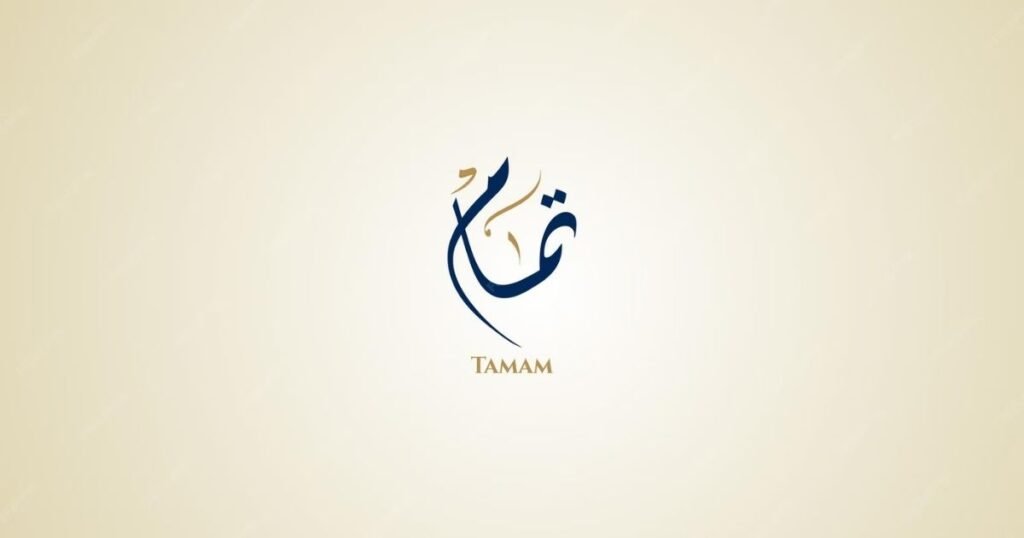
In Arabic, tamam is written as تمام. It carries the sense of completeness or perfection. Understanding how it appears in Arabic letters helps you appreciate both its sound and its deeper linguistic roots. Let’s explore it step by step in a simple and friendly way.
Arabic Script Writing
The word tamam in Arabic script looks like this: تمام.
Arabic is written from right to left. So when you read tamam, you begin from the letter on the right side and move left. The flow feels connected and continuous, almost like cursive writing in English.
One beautiful thing about Arabic script is that most letters join together. In تمام, the letters connect smoothly, giving the word a balanced and symmetrical appearance. It visually reflects its meaning of completeness.
Letter-by-Letter Breakdown
Let’s break down تمام into its individual letters:
- ت (Taa): This is the first sound, “T.” It has two dots above it. It gives the word its clear starting sound. Without it, the meaning would completely change.
- م (Meem) :This word appears twice in the word. It produces the “M” sound. The repetition creates a soft rhythm: ta-maam. Repeated letters in Arabic often strengthen the sense of fullness or emphasis.
- ا (Alif) : The straight vertical line represents a long “aa” sound. It stretches the pronunciation, making the word feel complete and extended rather than short and abrupt.
Together, these alphabets form a word that sounds smooth and balanced, matching its meaning of “complete” or “perfect.”
Different Arabic Writing Styles
Arabic calligraphy adds even more beauty to the word tamam. Depending on the writing style, it can look slightly different while keeping the same meaning.
- In Naskh script, the letters are clear and easy to read. This style is common in books and printed text.
- In Ruq’ah script, the writing becomes simpler and more compact. It’s often used in everyday handwriting.
- In Diwani or decorative calligraphy, the word may look artistic and flowing, sometimes used in designs or wall art.
A lesser-known detail is that Arabic calligraphy often reflects meaning through balance. Since tamam means completeness, calligraphers sometimes design it symmetrically to visually represent wholeness.
In the end, understanding tamam in Arabic letters is more than learning spelling. It helps you see how sound, script, and meaning connect beautifully in the Arabic language. Once you notice these details, even a simple word like تمام feels richer and more meaningful.
Tamam Reply in Arabic
Have you ever said tamam and wondered what the perfect reply should be? It may sound like a simple word, but replying to tamam in Arabic can subtly change the mood of a conversation. Tone, region, and situation all play a role.
In Arabic conversations, replies are rarely robotic. They carry warmth, respect, and sometimes emotion. So when someone says tamam, your response depends on what they mean are they confirming, agreeing, or signaling something is finished? Let’s explore how replies naturally work.
Regional Variations
Arabic dialects shape how people respond to tamam. The meaning stays similar, but the flavor changes.
- Levantine Arabic (Jordan, Lebanon, Syria, Palestine)
People might reply with phrases that add friendliness, like “tamam, yalla” (okay, let’s go). It keeps the energy moving. Conversations feel relaxed and expressive. - Gulf Arabic
Replies can sound slightly more formal, especially in work settings. Someone may add a respectful phrase after tamam to show acknowledgment and politeness. - Egyptian Arabic
Responses often carry a lively tone. A stretched-out reply can signal excitement, while a quick one feels casual and neutral.
A small shift in pronunciation can change the emotional weight of the exchange. That’s part of the beauty of dialects.
Situation-Based Replies
The context matters just as much as the word itself. Think of tamam like the English word “okay.” You wouldn’t respond the same way in every situation.
- Work or Formal Setting
If anybody says tamam after giving instructions, you might respond with reassurance, such as confirming timelines or adding gratitude. It shows professionalism. - Between Friends
The reply always can be lighter. You might add humor or enthusiasm. It keeps the conversation warm and natural. - Family Conversations
Replies often include emotional tone. A parent saying tamam might expect obedience, while a sibling saying it may just mean agreement. - Problem-Solving Situations
If tamam signals that an issue is resolved, a reply may express relief or appreciation.
Understanding the situation helps you choose the right emotional layer.
Adding Emotion to Replies
Arabic communication is expressive. Emotion often lives in tone rather than vocabulary.
- A soft reply shows calm acceptance.
- A cheerful tone adds excitement and positivity.
- A firm tone may signal seriousness or authority.
- Repetition, like saying it twice, can show emphasis or reassurance.
A lesser-known detail is that in some conversations, silence after tamam can also be meaningful. It may signal full understanding without needing extra words.
In the end, replying to tamam in Arabic isn’t about memorizing fixed phrases. It’s about reading the mood, the relationship, and the moment. Once you tune into tone and context, your replies will feel natural, confident, and culturally aware.
You May Also Like; Nice Meaning
Is Tamam Arabic or Turkish
It’s a simple question, but the answer carries centuries of history. When you hear the word tamam, you might wonder is it Arabic or Turkish? The truth is, it belongs to both, but its roots tell an interesting story.
Words travel just like people do. They move across borders, settle into new cultures, and sometimes feel so natural that no one questions their origin. That’s exactly what happened with tamam. Let’s break it down clearly and simply.
Original Language: Arabic
The word tamam originally comes from Arabic. It is derived from the Arabic root T-M-M (تمم), which relates to completeness, perfection, and fulfillment. In classical Arabic, the word carries a strong meaning of something being fully completed or perfected.
It appears in both formal and everyday speech. In Arabic grammar, the root also forms other related words that express finishing or accomplishing something fully. So historically and linguistically, tamam is undeniably Arabic in origin.
How Turkish Adopted Tamam
Now here’s where the journey gets interesting.
During the Ottoman period, Turkish absorbed thousands of Arabic words. This happened because Arabic was the language of religion, scholarship, and administration in many parts of the empire. Tamam entered Turkish during this time and became part of daily speech.
What makes it fascinating is that even after modern Turkish language reforms removed many Arabic-origin words, tamam survived. Why? Because it was practical, simple, and widely used. People loved it. It had already become natural.
Current Status in Both Languages
Today, tamam is fully alive in both Arabic and Turkish, but it functions slightly differently.
- In Arabic, it still connects to the deeper meaning of completeness and perfection. It can be formal or casual depending on context.
- In Turkish, it mostly means “okay,” “alright,” or “done.” It feels conversational and is extremely common in everyday life.
Interestingly, many Turkish speakers don’t even think of it as a borrowed word anymore. It feels completely Turkish in daily use.
Key Differences in Usage
Although the word sounds the same, usage varies in subtle but important ways:
- Depth of Meaning : In Arabic, the word connects to a root system that produces many related forms. In Turkish, it stands alone without that root-based expansion.
- Tone and Emotion : Arabic usage often carries expressive tone changes. In Turkish, it can sometimes sound firmer or more direct.
- Cultural Weight : In Arabic, the word may appear in more formal or literary contexts. In Turkish, it is primarily conversational.
- Frequency :While common in both languages, Turkish speakers use it constantly in daily interaction, sometimes multiple times in a short conversation.
A lesser-known detail is that language borrowing often strengthens a word rather than weakens it. When a word survives language reforms and cultural shifts, it usually means it fills an important social need. Tamam clearly does.
So, is tamam Arabic or Turkish? Its roots are Arabic, but it has grown comfortably into Turkish life. It’s a shared word now, carrying history in its sound and practicality in its use. Sometimes, the most interesting words are the ones that belong to more than one culture.
Other Languages Using Tamam
The word tamam is not limited to one country or culture. It has traveled across regions and become part of everyday speech in different languages. While its core meaning stays similar, pronunciation and tone may change slightly depending on the place and local communication style.
- In Turkish, it commonly means okay, done, or confirmed in daily conversation.
- In Urdu, it often means complete, finished, or all.
- In Persian (Farsi), it is used to express completion or agreement.
- In Kurdish, it can signal confirmation or satisfaction.
- In Hebrew slang, it sometimes appears informally with a similar sense of agreement.
- In Bosnian and Balkan speech, it may be heard due to Ottoman influence.
- In modern online chats, it is used casually across cultures to show quick approval.
Modern Language Reforms
Modern language reforms focus on updating and standardizing language to make it easier to learn, use, and communicate in contemporary society. These reforms often involve spelling simplification, grammar adjustments, and incorporating loanwords naturally into daily usage.
The interpretation may vary depending on the situation:
- Simplified Writing Systems ;Some languages adopted simpler spelling rules to improve literacy and reduce confusion.
- Standardization Across Regions ; Reforms helped unify dialects into a common, official form for education and media.
- Inclusion of Loanwords ;Modern vocabulary often borrows terms from other languages while keeping pronunciation accessible.
- Educational Implementation ; Schools adopt reformed grammar and spelling rules to teach younger generations more efficiently.
- Cultural Resistance ; Some communities resist reforms, preferring traditional forms for cultural or historical reasons.
These modern language reforms balance practicality with preserving cultural identity, making communication clearer without losing heritage
Cultural Significance
Cultural significance highlights how a word, phrase, or practice carries deeper meaning within a society. Understanding its cultural context helps learners use it appropriately and respectfully in daily life.
The interpretation may vary depending on the situation:
- Symbol of Respect ; Certain words reflect politeness, honor, or reverence in conversations.
- Historical Context ;Many terms have roots in history, shaping their current social and cultural meaning.
- Regional Variations ; Usage can differ across countries, dialects, or communities, affecting interpretation.
- Social Interaction ; Some expressions convey agreement, confirmation, or emotional nuance in communication.
- Cultural Preservation vs. Modern Adaptation ; While modern usage evolves, traditional meanings often remain valued for heritage.
Recognizing cultural significance ensures effective communication, showing awareness of traditions, values, and social norms within a language community.
Ana Tamam Meaning
Ana Tamam is a widely used Arabic phrase that literally means I am okay or I am fine. People often use it in daily conversations to indicate their well-being. It can also show that everything is going smoothly or under control. This simple expression is friendly, casual, and an essential part of everyday Arabic communication, especially among friends and family.
Besides expressing personal well-being, Ana Tamam is often used to show understanding or agreement. For instance, after receiving instructions or guidance, replying Ana Tamam signals that you comprehend and are ready to follow. The phrase’s tone can vary depending on context, speaker, or emotion. Learning Ana Tamam helps in smooth conversations and connecting naturally with Arabic speakers across different regions.
Literal Translation
Have you ever translated a word perfectly and still felt like something was missing? That’s the tricky part about literal translation. It gives you the dictionary meaning, but not always the real-life feeling behind the word.
When we talk about literal translation, we mean converting a word exactly as it appears, piece by piece. But language is more than vocabulary. It carries emotion, culture, tone, and context. Let’s explore why word-for-word meaning doesn’t always tell the full story.
Word-by-Word Meaning
translation focuses on breaking a word into direct equivalents.
For instance, when a word means “complete” in its root form, that’s what the dictionary will show you. Technically correct. But in conversation, that same word might actually mean “okay,” “I understand,” or “that’s enough.”
Think of it like translating the English word “cool.” Literally, it relates to temperature. But socially, it often means “great” or “nice.” That’s where literal meaning stops being enough.
Common Usage Contexts
Meaning shifts depending on the situation. Context changes everything.
- Formal settings ; A word may carry its original, precise meaning. In business or academic language, literal translation often works better.
- Casual conversations ;The same word might simply signal agreement or acknowledgment rather than its dictionary definition.
- Problem-solving moments ; It may express reassurance or confirmation rather than completion.
- Instructions or commands ; Sometimes it signals compliance rather than description.
Context acts like a filter. It shapes how the listener understands the word.
Emotional Variations
Tone can completely transform meaning.
A calm delivery may signal neutral agreement. A stretched-out version might show excitement. A sharp tone could suggest impatience. Literal translation cannot capture these emotional layers.
In many languages, emotion lives between the lines. It’s carried in sound, speed, and expression not just vocabulary. That’s why two identical words can feel very different.
Regional Dialect Variations
Dialects also play a role.
In one region, a word may sound friendly and relaxed. In another, it may feel firm or more formal. Even pronunciation can subtly change the emotional impact.
A lesser-known fact is that some words keep their literal meaning across dialects but shift in frequency. One region may use it constantly in daily speech, while another reserves it for specific situations. Literal translation cannot show that cultural habit.
Alternative Expressions
Languages often provide multiple ways to express the same idea.
Instead of relying on literal translation, speakers may choose alternatives depending on mood or setting. For example:
- Saying “alright” instead of “complete.”
- Saying “sounds good” instead of “finished.”
- Using a short confirming phrase instead of a descriptive word.
These alternatives feel more natural because they match real-life usage rather than textbook meaning.
Key Differences in Usage
To understand whether literal translation works, consider these differences:
- Accuracy vs. Naturalness ; Literal translation may be accurate, but not natural in conversation.
- Grammar vs. Culture ; Dictionaries focus on grammar; speakers focus on culture and tone.
- Meaning vs. Intention ;Words carry intention beyond definition.
- Static vs. Dynamic Language ; Literal meaning stays fixed, but spoken language evolves.
Language is alive. It adapts to people, emotions, and social settings.
In the end, literal translation is a helpful starting point but it’s rarely the full picture. To truly understand a word, you need context, tone, and cultural awareness. Once you look beyond word-for-word meaning, language begins to feel natural instead of mechanical.
Common Conversations Using Ana Tamam
You’ve probably heard someone say “ana tamam” and wondered what it really means in conversation. Is it just “I’m okay”? Or does it carry something more? The answer depends on the moment, the tone, and even the body language.
In simple terms, ana tamam means “I’m fine,” “I’m good,” or “I’m okay” in Arabic. But like many everyday phrases, it goes beyond literal translation. It can show reassurance, independence, agreement, or even quiet confidence. Let’s look at how it works in real life.
Common Conversations Using Ana Tamam
You’ll often hear ana tamam in situations like these:
- When someone offers help
Imagine a friend asking, “Do you need help?” Replying with ana tamam signals that you’re okay and can manage on your own. It’s polite and reassuring. - When asked about your condition
If someone checks on you and says, “Are you alright?” answering with ana tamam expresses calm and stability. - During small misunderstandings
Sometimes it’s used to ease tension. Saying ana tamam can mean, “It’s okay, no problem.” - After completing a task
It can also signal readiness, like saying, “I’m all set.”
Cultural Notes
In many Arabic-speaking cultures, communication is relational. That means tone and intention matter deeply.
Saying ana tamam isn’t just about your condition. It can also reassure the other person. You’re telling them not to worry. That emotional layer is important.
Interestingly, in some settings, saying it too quickly might suggest you don’t want further discussion. A slower, warmer tone feels more open and friendly.
Body Language Accompaniment
Words rarely stand alone.
- A small smile with ana tamam shows genuine comfort.
- A nod reinforces agreement or reassurance.
- Folded arms and a sharp tone may suggest defensiveness, even if the words sound positive.
In Arabic communication, gestures and facial expressions often complete the meaning. The phrase works together with the body.
When NOT to Use Ana Tamam
Even simple phrases have limits.
- In formal professional settings, it may sound too casual. A more structured response might be better.
- When someone expresses serious concern, using only ana tamam could feel dismissive. You may need to explain more.
- During emotional conversations, a brief reply might appear closed off rather than reassuring.
Context always decides appropriateness.
Quick Response Guide
Here’s a simple way to think about it:
- use this term when you want to show reassurance.
- it can be casually used with friends and family.
- Adjust your tone depending on the situation.
- Add explanation if the situation is serious.
- Avoid using it as a shortcut to end meaningful conversations.
Key Differences in Usage
The biggest difference lies in tone and intention.
In casual settings, it signals comfort and independence. In emotional contexts, it may hide feelings rather than express them. Among close friends, it feels natural and warm. In formal spaces, it can sound informal.
A lesser-known detail is that repeating it saying it twice can either strengthen reassurance or subtly signal impatience, depending on delivery.
In the end, ana tamam is simple on the surface but layered in meaning. It expresses more than “I’m fine.” It reflects emotion, culture, and connection. Once you understand the tone behind it,
you’ll use it with confidence and natural ease.
Additional Uses of “Tamam” (Quick Reference Table)
Tamam is a versatile word in Arabic. Beyond meaning okay or complete, it can express agreement, confirmation, or readiness in many everyday situations.
| Use Case | Description | Example Context |
| Confirming understanding | you understood what someone said | Teacher explains a task, student replies Tamam |
| Showing readiness | you are ready to begin | Team leader asks if everyone is ready, reply Tamam |
| Agreeing politely | agreement without arguing | Friend suggests a plan, you say Tamam |
| Indicating completion | Marks that a task is done | After finishing work, reply Tamam |
| Responding to instructions | Confirms you will follow directions | Boss gives instructions, employee replies Tamam |
| Expressing everything is fine | Conveys that all is well | Checking in with a friend, reply Tamam |
| Acknowledging plans | Confirms participation in plans | Meeting arranged, reply Tamam |
Extra Helpful Bullet Points for Quick Learning
Learning Tamam can be easy if you focus on simple tips and repeated practice. Here are extra helpful points to remember for quick learning and daily usage:
- Practice saying Tamam aloud in short conversations
- Listen to native speakers for correct pronunciation
- Use Tamam when confirming understanding in messages
- Repeat Tamam in different contexts to remember meaning
- Watch videos or shows where Tamam is commonly used
- Pair Tamam with gestures for stronger communication
- Try writing Tamam in Arabic script to reinforce memory
Frequently Asked Questions
How to pronounce Tamam Meaning correctly?
Tamam Meaning is pronounced ta-maam with emphasis on the second syllable. Tamam Meaning is important to get right for clarity and proper communication.
Can Tamam Meaning show politeness?
Yes, Tamam Meaning can soften responses. Using Tamam Meaning politely shows respect while confirming understanding or agreement with someone’s request.
Is Tamam Meaning formal in Arabic?
Tamam Meaning can be both formal and casual. Tamam Meaning adapts depending on the conversation, tone, and social context.
How does Tamam Meaning vary by region?
Tamam Meaning differs across Arabic-speaking regions. Tamam Meaning may emphasize agreement, completion, or okay depending on dialect and local customs.
Why is Tamam Meaning important in conversations?
Tamam Meaning ensures clarity and understanding. Using Tamam Meaning correctly helps avoid confusion and strengthens social connections in Arabic or Turkish-speaking communities.
Conclusion
Understanding Tamam Meaning helps you communicate clearly in Arabic and Turkish. Infact ,it shows agreement, completion, or understanding in daily conversations. Knowing Tamam meaning in Arabic makes it easier to connect with people and follow conversations. Using it correctly demonstrates respect and awareness of cultural context.
Many people use it in casual chats, messages, and even formal settings. Its flexibility allows it to express okay, alright, complete, or good. Practicing in real conversations helps you master its usage. The tone and situation affect how it is understood, making this small word surprisingly powerful in communication. Overall, learning Tamam Meaning opens doors to smoother conversations and better cultural understanding.
.