
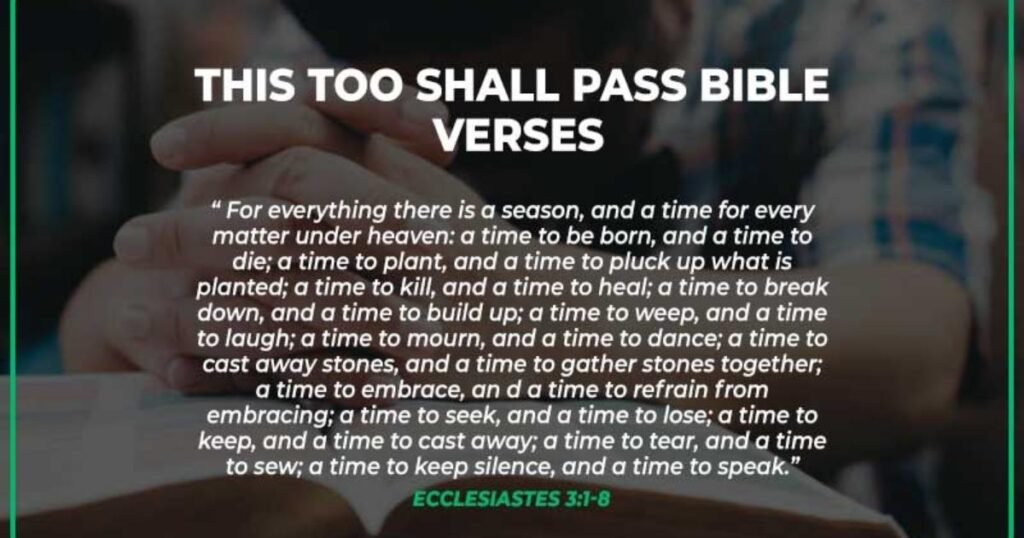

Life has a way of piling things on all at once, and in those moments, you might find yourself searching for comfort in familiar words like “This Too Shall Pass.” Maybe you’re tired, hurting, or just wondering if things will ever feel normal again. It’s a phrase people turn to when they need hope, but it also raises a deeper question: Is “This Too Shall Pass” a Bible Verse, or just a saying we’ve learned to lean on?
In this blog post, we’ll gently unpack the meaning behind the phrase and explore What the Bible Says About Suffering in a real, practical way. You’ll learn about God’s Faithfulness in Hard Times and how true Hope and Peace Through Jesus Christ can bring strength when life feels overwhelming. By the end, you’ll have clarity, encouragement, and a reason to keep moving forward
Bible Origins of “This Too Shall Pass”
Many people believe the phrase comes directly from the Bible. In truth, the exact words are not found in Scripture. However, the idea behind it clearly reflects biblical themes. The Bible often teaches that situations change, human power fades, and God remains constant through every season of life and suffering. This message offers quiet reassurance during uncertain and painful moments.
Throughout the Bible, believers face hardship, loss, and long waiting periods. Joseph suffered, David struggled, and Job endured deep pain. Yet their trials did not last forever. God worked through each season to teach faith, patience, and trust. These stories show why the message still comforts people facing difficulties today when life feels heavy, confusing, lonely, uncertain, and overwhelming times.Although not a direct Bible verse, This Too Shall Pass reflects biblical truths about temporary trials and God’s lasting faithfulness.
We Are Being Renewed Day by Day
This heading highlights the idea that spiritual renewal is an ongoing process, not a one-time event. In Christianity, it reflects how God strengthens believers inwardly even when life feels difficult outwardly. This concept connects closely with spiritual growth through trials, faith during hard times, and God’s steady work within the human heart.
The background for this idea comes from Scripture, where believers are reminded that physical struggles do not cancel spiritual renewal. Even during suffering, God continues shaping character, renewing hope, and building endurance through faith. The interpretation may vary depending on the situation:
- Renewal can mean gaining inner strength while facing ongoing hardship
- For some, it reflects emotional healing after loss or disappointment
- It may involve learning patience during delayed answers from God
- Others see renewal as growing trust when suffering feels overwhelming
- A challenge is that renewal can feel slow, leading some to doubt God’s work
Overall, this teaching offers biblical encouragement during hardship while acknowledging that renewal often happens quietly, over time, and through perseverance rather than instant relief.
We Have Victory and Peace Through Christ

This heading emphasizes the Christian belief that true victory and lasting peace come through Jesus Christ, even in seasons of pain. It reflects peace through Jesus Christ, Christian hope in suffering, and confidence that hardship does not have the final word.
In the Bible, peace is not described as a trouble-free life but as inner calm rooted in faith. Through Christ’s sacrifice and promises, believers are encouraged to stand firm during trials, trusting God’s purpose in difficult seasons. The interpretation may vary depending on the situation:
- Victory may mean endurance, not immediate relief from suffering
- Peace can exist alongside pain, offering emotional and spiritual stability
- Some experience strength through faith, while others struggle with doubt
- Delayed outcomes can challenge belief, yet deepen trusting God in pain
- Long-term trials often shape Christian perseverance and maturity
This perspective offers biblical comfort and peace while honestly acknowledging that faith journeys include both confidence and struggle.
We Are Comforted Through Christ and Able to Comfort Others
Have you ever noticed how the people who offer the deepest comfort are often those who’ve walked through pain themselves? There’s something powerful about being understood without needing to explain every detail. That kind of comfort sits at the heart of what this teaching is about.
In simple terms, the Bible shows that Christ doesn’t just comfort us so we can feel better and move on. He meets us in our weakness, gives us strength during hard seasons, and then uses our experience to help others. What we receive from Him doesn’t stop with us. It flows outward, often when we least expect it.
Here’s how that comfort works in real life:
Comfort grows out of real pain, not theory
Biblical comfort isn’t abstract. It comes from lived experiences of loss, waiting, and struggle. When someone has felt God’s comfort during suffering, their words carry honesty and weight.
Shared struggles create deeper connection
People are often more open to help from someone who has “been there.” This reflects a biblical view of suffering where hardship becomes a bridge, not a barrier, between people.
God’s comfort shapes empathy and patience
Trials soften the heart. They teach believers how to listen without rushing and support without judging, reflecting God’s mercy in difficult times.
Helping others strengthens personal faith
Offering encouragement often reminds us of God’s faithfulness in suffering. It reinforces trust and renews hope, even when challenges continue.
A lesser-known truth is that this cycle of comfort builds community. The Bible consistently shows faith thriving not in isolation, but through shared burdens and mutual support.
The takeaway is simple but meaningful: when Christ comforts you, it’s never wasted. Your story, shaped by hardship and grace, may become exactly what someone else needs to keep going
We Learn Greater Perseverance, Strength, and Endurance Through Suffering

Most people don’t realize how strong they are until life gives them no other choice. Hard seasons have a way of pulling hidden strength to the surface, even when we feel tired, unsure, or overwhelmed. That quiet growth often begins in moments we would never choose for ourselves.
In simple terms, suffering doesn’t just test faith—it trains it. The Bible often shows hardship as a refining process, where endurance is built step by step. Like muscles growing through resistance, faith deepens through pressure, shaping perseverance that lasts beyond the pain.
Here’s how suffering helps develop strength and endurance over time:
Perseverance grows when quitting feels easier than continuing
Endurance is learned in small decisions to keep going. Each step forward, even on hard days, builds spiritual stamina and steady faith during hard times.
Strength develops through repeated trials, not instant relief
The Bible highlights strength through trials, showing that resilience often forms slowly. Long struggles teach patience, discipline, and reliance on God rather than self.
Hardship clarifies what truly matters
Suffering strips away distractions and weak foundations. This clarity helps believers focus on God’s promises in difficult seasons and develop lasting inner strength.
Endurance shapes character, not just outcomes
A lesser-known truth is that endurance changes who you become, not just what you survive. Trials often produce humility, wisdom, and deeper trust in God’s plan.
The takeaway is this: suffering may feel like a setback, but it often becomes a training ground. Through endurance and faith, believers emerge stronger, wiser, and better prepared for whatever comes next.
Suffering Reminds Us Where True Joy and Lasting Hope Are Found
Suffering has a way of stripping life down to what truly matters. When comfort fades, many people begin searching for deeper meaning. Joy tied to success or ease quickly disappears. Hard seasons push the heart to look beyond circumstances. They remind us that lasting joy is not found in things, but in God’s presence and promises that never truly fail.
Suffering also reshapes our understanding of hope. It teaches that real hope is steady, not fragile. The Bible points to hope rooted in Christ, not outcomes. Even when pain remains, faith anchors the soul. This kind of hope grows quietly over time and carries people through loss, waiting, and uncertainty during the hardest seasons of life’s unexpected painful difficult journeys.
His Power Works Within Us

This heading focuses on the belief that God’s strength actively works within believers, especially during weakness and struggle. It reflects strength through trials, faith during hard times, and the idea that God’s power is not limited by human ability.
In the Bible, God’s power is often shown through ordinary people facing difficult situations. Rather than removing every hardship, God works internally, shaping character and sustaining faith through challenging seasons. The interpretation may vary depending on the situation:
- God’s power may appear as inner peace when circumstances do not change
- For some, it brings endurance and patience during long periods of waiting
- Others experience guidance and clarity while facing uncertainty
- A struggle can occur when growth feels slow or unseen
- Over time, faith is strengthened through reliance on God’s power, not self-effort
This perspective offers biblical encouragement and reminds readers that even quiet, unseen strength reflects God’s faithful work within the human heart.
When It Passes, We Will Come Out as Gold
When suffering feels intense, it often seems endless. The Bible compares trials to fire that refines gold. Heat removes impurities and reveals true value. In the same way, hardship tests faith and exposes weakness. Though painful, this process strengthens character. It prepares the heart for greater trust, deeper humility, and lasting spiritual maturity that could not grow otherwise naturally today.
Many believers misunderstand refinement and expect instant relief. Scripture shows growth often follows endurance. Waiting seasons shape patience and wisdom. Pain passes, but lessons remain. Over time, faith becomes steadier and hope stronger. Like purified gold, believers emerge changed, more resilient, and better prepared to face future trials with courage, peace, and renewed confidence through God’s faithful refining work process.
You May Also like: Nice Meaning
God’s Faithfulness Endures Through Every Season
Some days, faith feels strong and steady. Other days, it feels like you’re just trying to hold on. That’s when the idea of God’s faithfulness matters most, not as a theory, but as something real you can lean on.
At its core, this truth means God does not change with circumstances. Seasons shift, emotions rise and fall, but God’s promises remain steady. The Bible repeatedly shows that even in suffering, delay, or loss, God stays present and trustworthy.
Here’s what God’s faithfulness looks like across different seasons of life:
Faithfulness during waiting, not just answers
Many biblical stories highlight long waiting periods. God often works quietly behind the scenes, building endurance and trust before change appears.
Steadiness when life feels unstable
In difficult seasons, God’s faithfulness provides emotional and spiritual grounding. This steady presence helps believers maintain faith during hard times.
Provision in unexpected ways
God’s help does not always arrive as planned. Sometimes it comes through people, timing, or inner strength rather than immediate solutions.
Growth through struggle, not avoidance of it
A lesser-known truth is that faith often deepens most during hardship. Trials refine belief and reveal God’s faithfulness in suffering.
The takeaway is simple: seasons change, but God does not. When life feels uncertain, trusting God’s faithfulness offers hope, stability, and strength to keep moving forward.
Is “This Too Shall Pass” a Biblical Promise or a Popular Saying?
Many people assume this phrase “This Too Shall Pass” is a clear biblical promise. In reality, the exact wording does not appear in Scripture. The saying became popular through history and storytelling. Yet its message echoes biblical truth. The Bible teaches that seasons change, suffering is temporary, and God remains faithful even when circumstances feel overwhelming and uncertain for many believers today around world.
Understanding the difference helps set healthy expectations. A promise guarantees an outcome, but a saying offers perspective. Scripture focuses on hope in God, not quick relief. Trials may last longer than expected. Still, the Bible points to eternal purpose, growth through hardship, and peace found through Jesus Christ during painful seasons of waiting that test faith and patience deeply daily.
Why This Phrase “This Shall Too Pass” Brings Comfort During Hard Times
Hard times often make people feel stuck, helpless, or afraid of the future. Comforting phrases help because they give perspective when emotions feel overwhelming. This saying reminds people that pain is not permanent. It offers a mental pause during stress. Even without instant solutions, it helps calm racing thoughts and brings emotional relief during moments of fear and uncertainty.
The phrase This Too Shall Pass Pass also works because it creates hope without denying pain. It doesn’t say suffering is easy or meaningless. Instead, it gently reminds people that seasons change. For many, that reminder brings strength to endure one more day. It encourages patience, resilience, and trust while waiting for better days to arrive.
Temporary Pain vs. Eternal Glory in the Bible
Pain has a way of feeling permanent when you’re living inside it. A hard season can stretch on so long that it clouds everything else. The Bible, however, invites us to step back and see suffering through a wider lens.
In simple terms, Scripture teaches that present pain is real but not final. Life’s struggles are temporary, while God’s promises extend beyond what we see now. This contrast helps believers endure hardship with hope, trusting that God is working toward something far greater than the moment.For many believers, This Too Shall Pass offers a simple reminder that pain does not have the final word.
Here’s how the Bible frames temporary pain versus eternal glory:
Pain has a purpose, even when it feels pointless
The Bible acknowledges suffering honestly but shows that trials can shape character, deepen faith, and prepare believers for lasting spiritual growth.
Eternal glory shifts perspective
A lesser-known insight is that focusing on what lasts forever reduces the weight of present troubles. It doesn’t erase pain, but it gives it context and meaning.
God measures life differently than we do
While people often measure success by comfort, Scripture points to endurance and faith as signs of true strength during hard times.
Hope grows strongest in contrast with hardship
Light feels brighter after darkness. In the same way, eternal joy is better understood when life has included struggle.
The takeaway is this: pain may feel heavy now, but it isn’t the final chapter. The Bible encourages believers to hold on, knowing that what lies ahead far outweighs today’s difficulties.
God’s Presence in the Middle of Suffering
Suffering often brings a quiet question: Where is God right now? When pain lingers and answers feel distant, that question can sit heavy in the heart. The Bible doesn’t ignore this feeling. Instead, it speaks directly to it.
At its core, Scripture teaches that God does not step away during suffering. He draws closer. His presence may not remove pain instantly, but it offers strength, comfort, and guidance when life feels overwhelming and uncertain.
Here’s how God’s presence shows up in the middle of hardship:
God stays near, even when He feels silent
A lesser-known truth is that silence doesn’t mean absence. Many biblical figures experienced God’s presence through endurance rather than immediate answers.
Comfort often comes through people and moments
God’s presence is frequently expressed through support, kindness, or timely encouragement from others, reminding believers they are not alone.
Strength replaces weakness over time
During prolonged trials, God provides inner strength that sustains faith, reflecting God’s faithfulness in suffering.
Pain becomes a place of deeper connection
Suffering often leads to more honest prayer and reliance on God, strengthening trust during hard times.
The takeaway is simple: suffering may feel isolating, but God’s presence remains steady. Even in the darkest moments, He walks alongside those who trust Him.
How Faith Helps Us Endure Life’s Difficult Seasons
Faith helps people remain steady when life becomes uncertain or painful. In Christian teaching, faith during hard times provides inner strength, hope, and direction when solutions are not immediate.
Throughout the Bible, faith is shown as trust in God’s promises during seasons of waiting, loss, and testing. Rather than removing hardship, faith helps believers endure it with purpose and resilience. The interpretation may vary depending on the situation:
- Faith can offer emotional stability when circumstances feel overwhelming
- For some, faith strengthens patience during long and difficult seasons
- Others may struggle with doubt, yet still find endurance through prayer
- Faith encourages trusting God in pain, even without clear answers
- Over time, perseverance grows as believers rely on God’s guidance
This perspective supports a biblical view of suffering by acknowledging both strength and struggle while highlighting how faith sustains hope through life’s most challenging seasons.
What the Bible Teaches About Waiting on God
Waiting is rarely easy. When answers don’t come and time stretches on, waiting can feel heavier than the problem itself. The Bible speaks honestly about this struggle and offers guidance for moments when patience feels thin.
At its heart, waiting on God means trusting His timing, even when it doesn’t match our own. Scripture shows that waiting is not wasted time. It’s often a season where faith is shaped, strength is built, and direction becomes clearer.
Here’s what the Bible reveals about waiting on God:
Waiting develops trust, not passivity
A lesser-known truth is that biblical waiting is active. It involves prayer, obedience, and continued faith, not giving up or standing still.
Delays often prepare people for what’s next
Many biblical figures waited longer than expected. These delays shaped their character and prepared them for greater responsibility and purpose.
Waiting exposes where hope is truly placed
Long seasons of waiting test whether trust rests in outcomes or in God Himself. This process deepens reliance on God’s promises in difficult seasons.
Strength grows quietly during waiting
Even when nothing seems to change, endurance and patience are forming beneath the surface, reflecting spiritual growth through trials.
The takeaway is simple: waiting is not a sign of abandonment. According to the Bible, it is often where faith deepens and hope becomes stronger.
Learning to Trust God When Answers Are Delayed
Few things test faith like silence. When prayers go unanswered and time keeps moving, it’s easy to wonder if God is listening. That waiting space can feel confusing, frustrating, and deeply personal.
In simple terms, trusting God during delays means believing He is still working, even when progress is invisible. The Bible shows that delays are often part of spiritual growth, shaping patience and faith during hard times rather than offering quick relief.
Here’s what learning to trust God during delayed answers can look like:
Silence does not mean absence
A lesser-known truth is that God often works behind the scenes. Growth and preparation can happen long before answers arrive.
Delays refine faith, not weaken it
Extended waiting teaches endurance through faith and strengthens reliance on God’s promises in difficult seasons.
Trust grows through small daily choices
Choosing prayer, gratitude, and obedience during uncertainty helps build steady faith over time.
Uncertainty invites deeper dependence
When control feels lost, people often develop a more honest and meaningful relationship with God.
The takeaway is simple: delayed answers are not wasted time. They often become the place where trust deepens, faith matures, and hope becomes stronger.
How Prayer Sustains Us Through Painful Seasons
Prayer becomes a lifeline when pain feels heavy and words run out. It allows people to express fear, grief, and hope honestly. Even short prayers bring comfort. They remind the heart that God listens. In painful seasons, prayer creates space to breathe, reflect, and feel less alone while facing daily struggles with quiet strength.
Prayer also helps steady the mind over time. It doesn’t always remove pain, but it offers peace. Regular prayer builds trust and patience. It helps people release control and wait with hope. Through prayer, many find endurance, clarity, and the courage to keep moving forward one day at a time.
Biblical Examples of People Who Endured Suffering
The Bible includes many real stories of people who faced deep suffering yet remained faithful. These examples support a biblical view of suffering and show how endurance through faith can grow even in painful circumstances.
Scripture presents suffering as part of the human experience, often used to shape character and strengthen trust in God. These stories offer biblical encouragement during hardship and remind readers that struggle does not mean abandonment. The interpretation may vary depending on the situation:
- Job endured intense loss and pain, showing faith even while questioning God
- Joseph faced betrayal and imprisonment before God’s purpose became clear
- David experienced fear, waiting, and opposition while trusting God’s promises
- Paul suffered persecution yet continued spreading hope in Christ
- Some may struggle with these stories, finding it hard to relate to prolonged suffering
These examples highlight God’s faithfulness in suffering while honestly acknowledging doubt, pain, and perseverance across different seasons of life.
Why Hope in Christ Never Disappoints
Hope can feel fragile when life keeps breaking expectations. Plans fail, people let us down, and answers don’t always come. That’s why the Bible points to a different kind of hope, one that doesn’t depend on circumstances changing.
In simple terms, hope in Christ is steady because it rests on who He is, not on what happens. Even during suffering or delay, this hope offers peace, direction, and confidence that God is still at work behind the scenes.
Here’s why hope in Christ remains dependable:
It’s rooted in God’s promises, not outcomes
A lesser-known truth is that biblical hope looks forward with trust, even when results are unclear. This keeps faith strong during hard times.
It grows stronger through trials
Instead of collapsing under pressure, hope in Christ often deepens through suffering, reflecting spiritual growth through trials.
It offers peace without denying pain
Hope doesn’t ignore hardship. It provides calm and assurance while acknowledging real struggles and unanswered questions.
It lasts beyond temporary seasons
Unlike short-term optimism, Christian hope points to eternal meaning, giving endurance through faith during difficult seasons.
The takeaway is simple: when hope is anchored in Christ, it doesn’t fade with disappointment. It remains firm, steady, and life-giving, no matter the season.
God’s Purpose Behind Trials and Testing
Trials rarely come with explanations. When life feels unfair or overwhelming, it’s natural to ask why. The Bible doesn’t pretend these questions are easy, but it does offer insight into how trials can serve a deeper purpose.
In simple terms, trials are not meant to break faith but to shape it. Scripture often shows testing as a refining process, helping believers grow stronger, wiser, and more rooted in trust. Like metal strengthened by heat, faith is refined through pressure.
Here’s how the Bible explains God’s purpose behind trials and testing:
Trials reveal what faith is built on
Difficult moments expose whether trust rests in comfort or in God. This clarity helps strengthen genuine faith during hard times.
Testing produces endurance and maturity
A lesser-known truth is that spiritual strength often forms slowly. Trials build patience, perseverance, and deeper reliance on God’s promises.
Hardship reshapes priorities
Pain strips away distractions. It helps believers focus on what truly matters, leading to spiritual growth through trials.
God uses testing to prepare people for greater purpose
Many biblical figures were tested before stepping into leadership or responsibility. Their trials prepared them for future impact.
The takeaway is clear: trials are not meaningless. Though painful, they often become the place where faith is strengthened, character is shaped, and purpose becomes clearer.
How God Uses Hard Times to Strengthen Faith
Hard times challenge comfort but grow belief. When life feels uncertain, faith is tested and refined. Through struggle, trust deepens, reliance on God increases, and spiritual strength quietly forms over time.
- Difficult seasons expose weak foundations and rebuild stronger ones
- Struggles encourage deeper prayer and honest conversations with God
- Waiting teaches patience and long-term trust
- Pain often leads to clearer priorities and purpose
- Challenges develop resilience that comfort never could
- Faith grows when control is surrendered
- Hard times prepare believers for future responsibilities and service
Frequently Asked Questions
Is This Too Shall Pass a Bible verse found in Scripture?
No, the exact phrase This Too Shall Pass is not written in the Bible. However, its meaning reflects biblical teachings about temporary trials and God’s faithfulness during hard seasons.
Why do Christians say This Too Shall Pass during suffering?
Christians use This Too Shall Pass to remind themselves that pain is temporary. It reflects faith that God allows trials for growth and promises strength, hope, and renewal beyond suffering.
How does This Too Shall Pass relate to Christian hope?
The phrase This Too Shall Pass connects to Christian hope by pointing beyond present pain. It encourages believers to trust God’s promises and focus on eternal peace through Jesus Christ.
Can This Too Shall Pass help during long waiting seasons?
Yes, This Too Shall Pass helps many endure waiting seasons by offering perspective. It reminds believers that delays have purpose and God is still working even when answers feel slow.
Is trusting This Too Shall Pass the same as trusting God?
Trusting This Too Shall Pass should not replace faith in God. Instead, it works best when grounded in Scripture, reminding believers to rely on God’s wisdom, timing, and unchanging promises.
Conclusion
Life moves in seasons. Some are light. Others feel heavy and slow. In hard moments, people search for meaning and reassurance. Many turn to faith when answers feel far away. A common question is Is “this too shall pass” a Bible verse, especially during pain. While the words are not written directly, the message reflects the Bible and suffering journey found throughout Scripture. God stays present even when life feels uncertain.
The Bible offers steady guidance during trials. God’s Word about suffering teaches patience, growth, and trust. Pain is real, but it is not the end. Through Christian hope, believers learn to endure and grow stronger. Remembering This Too Shall Pass can bring calm in the moment. Faith reminds us that hardship changes, strength grows, and God’s promises remain firm through every season of life.